
Gathering4Ganit
A festival that makes mathematics visible, playful, historical, and human — drawing from the long, many-authored mathematical traditions of India.
A festival for those who love mathematics — and for those afraid of it.
Gathering4Ganit is a festival dedicated to making mathematics joyful, historical, hands-on, and accessible. Inspired by Gathering 4 Gardner, it brings together mathematicians, historians, philosophers, teachers, writers, puzzle makers, artists, and students to explore India's mathematical traditions and their relevance for the future of education.
Through talks, demonstrations, games, tools, exhibits, workshops, and storytelling, we help young people experience mathematics not as fear, but as wonder — as one of humanity's most beautiful ways of understanding reality.
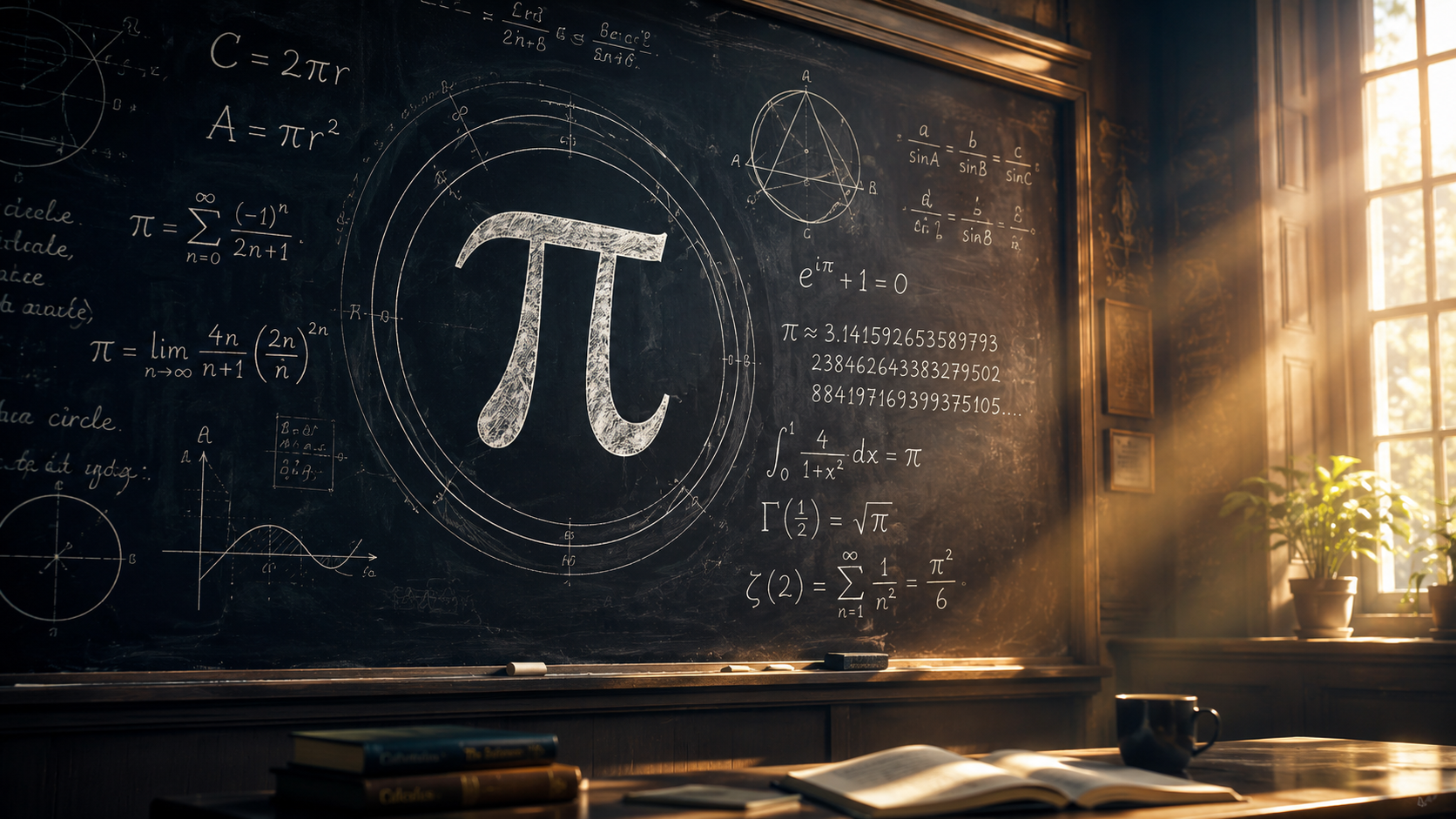
π — the circle's quiet companion.
Pi is the ratio of a circle's circumference to its diameter — about 3.14159, but truly infinite, never repeating. It appears in waves, planets, drums, heartbeats, and the rim of every wheel that has ever turned.
Long before calculators, Indian astronomers approximated π with astonishing care. Around 500 CE, Aryabhata wrote that a circle of diameter 20,000 had a circumference of about 62,832 — giving π ≈ 3.1416, accurate to four decimals. A number so simple, so strange, so beautiful that it has kept mathematicians awake for two thousand years.
1729 — the most famous number in mathematical conversation.

One day G. H. Hardy visited Srinivasa Ramanujan, who was unwell in a hospital near London. Hardy remarked that he had arrived in taxicab number 1729, and that the number seemed to him rather dull — he hoped it was not a bad omen.
"No, Hardy," Ramanujan replied at once. "It is a very interesting number. It is the smallest number expressible as the sum of two cubes in two different ways."
Numbers of this kind are now called taxicab numbers — born of an ordinary ride and an extraordinary mind.
Mathematics was never meant to be feared. It was meant to be discovered.
Palatable for the young
Students should encounter mathematics not as punishment, but as play, beauty, pattern, and power.
Rooted in Indian experience
Geometry, number systems, astronomy, logic, algebra, combinatorics, games, architecture — across centuries.
Interdisciplinary
Historians, mathematicians, philosophers, Sanskrit scholars, educators, writers, architects, astronomers, artists.
Hands-on and experiential
Mathematics made visible through ropes, sticks, shadows, altars, instruments, games, diagrams and models.
Eight ways into one ancient, living conversation.
History of Indian Mathematics
From the Śulba Sūtras to Aryabhata, Brahmagupta, Bhaskara, the Kerala School, Ramanujan and beyond.
Architecture and Sacred Geometry
Altars, temples, symmetry, proportion, measurement and spatial imagination.
Mathematics in Astronomy
Jantar Mantar, calendars, planetary motion, shadows, angles and time.
Games and Strategy
Board games, probability, decision-making, combinatorics, strategic reasoning.
Mathematics in Everyday India
Markets, craft, music, cooking, weaving, agriculture, local knowledge.
Philosophy of Mathematics
What is number? What is proof? What does zero mean? Why does mathematics describe the world?
For the Math-Afraid
Slow, playful, non-judgmental workshops for children, parents and teachers.
Recreational and Puzzles
Puzzles, paradoxes, magic, illusions, patterns and playful problem-solving.
A festival of objects, voices, puzzles and people.
Mathematical objects and demonstrations
Rope-and-stake altar geometry, scale models of Jantar Mantar, water clocks, temple proportions, board games, shadow and symmetry demos.
Talks that tell the story
Short, engaging talks by historians, mathematicians, philosophers, Sanskrit scholars, architects, astronomers, writers, and teachers.
Mathematics for the math-afraid
Slow, playful sessions: puzzles, stories, paper folding, rope geometry, estimation challenges, rhythm patterns, everyday reasoning.
Writing mathematics for the young
Children's books, short essays, illustrated explainers, comics, bilingual stories, teacher-friendly material — without jargon.
Portable mathematics, for any classroom.
We are building portable Ganit Labs to help schools teach mathematics as discovery, not merely as drill — a small, joyful, complete kit of objects, puzzles, and stories.
- Rope geometry kits
- Shadow-measurement kits
- Puzzle boxes
- Ancient and modern board games
- Low-cost astronomy models
- Paper-folding geometry kits
- Fraction and proportion manipulatives
- Pattern cards
- Mathematical storybooks
- Teacher guides
Bring one small gift. Leave with many.
Inspired by the gift exchange tradition at Gathering 4 Gardner, every participant may bring one small mathematical gift to share. Mathematics grows through generosity, curiosity, and shared delight.
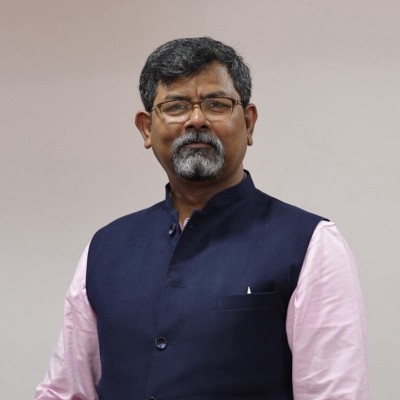
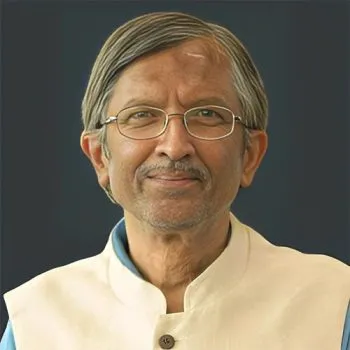
The minds behind Gathering4Ganit
— Srinivasa Ramanujan


You do not need to be a mathematician. Only curious.
Help us make mathematics beautiful again.
This is not just an event. It is a movement to build hands-on exhibits, school kits, public archives, and learning material that take mathematical joy to schools across India.