The 2026 Fields Medalists: Celebrating Mathematical Excellence

Hong Wang
Hong Wang’s work lies at the meeting point of geometry, analysis, and the mathematics of waves and shapes. She is best known for her work on the three-dimensional Kakeya conjecture, a long-standing problem that asks how small a region of space can be while still containing a line segment pointing in every possible direction.
One way to imagine the problem is to think of turning a pencil in space so that it points in every direction while trying to sweep through as little space as possible. Wang’s work helped bring a major chapter of this question to a close. Her achievement reminds us that mathematics often begins with a simple visual puzzle and grows into a profound theory of space.
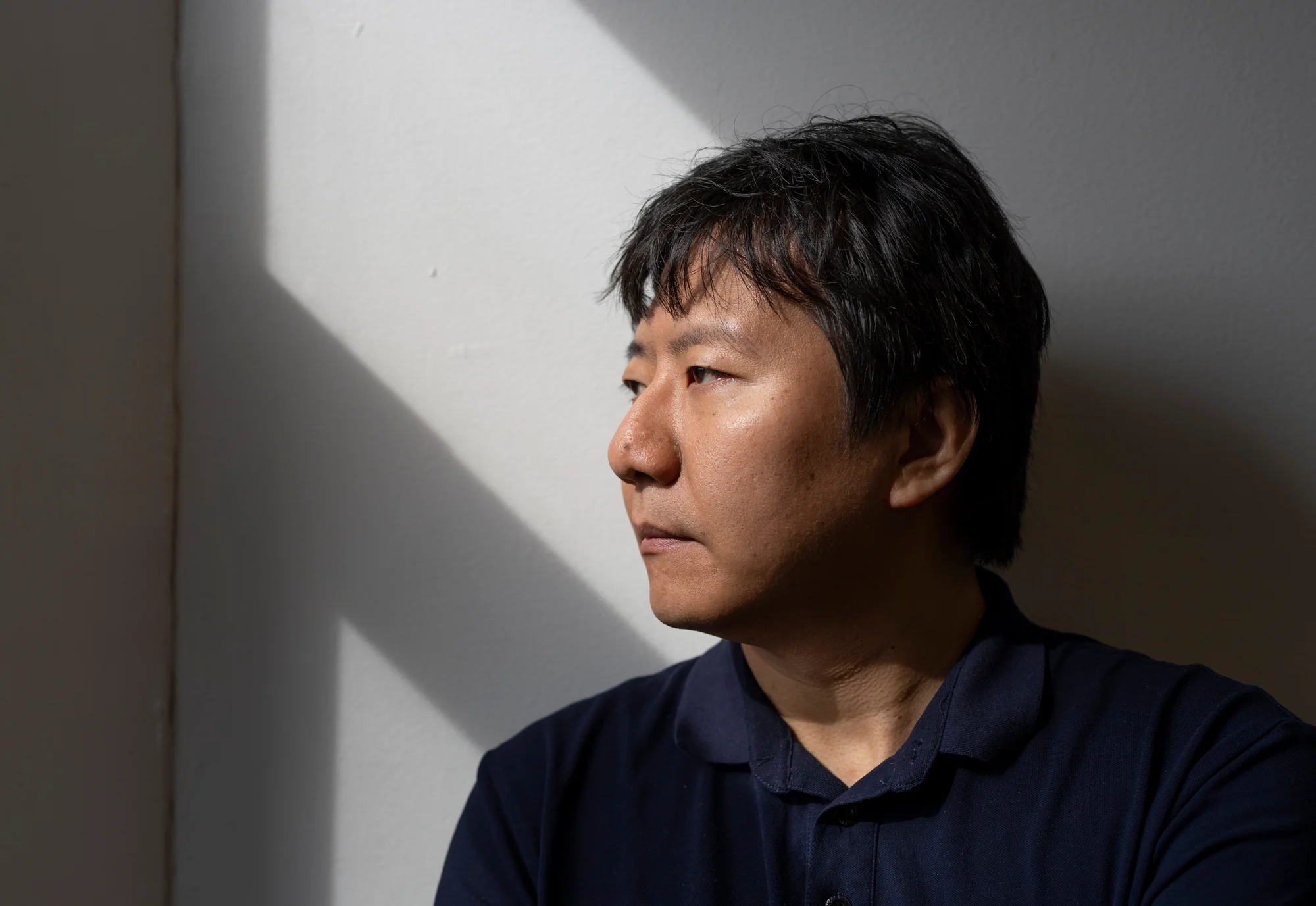
Yu Deng
Yu Deng was recognized for his remarkable work connecting the microscopic and macroscopic worlds of fluid motion. At the smallest scale, fluids are made of countless particles moving chaotically; at the visible scale, they seem to flow according to smooth and elegant equations.
For more than a century, mathematicians and physicists have tried to understand how these two pictures are connected. Deng and his collaborators made major progress by showing how the equations describing fluids at different scales can be reconciled. His work reveals mathematics as a bridge between apparent disorder and deep structure.
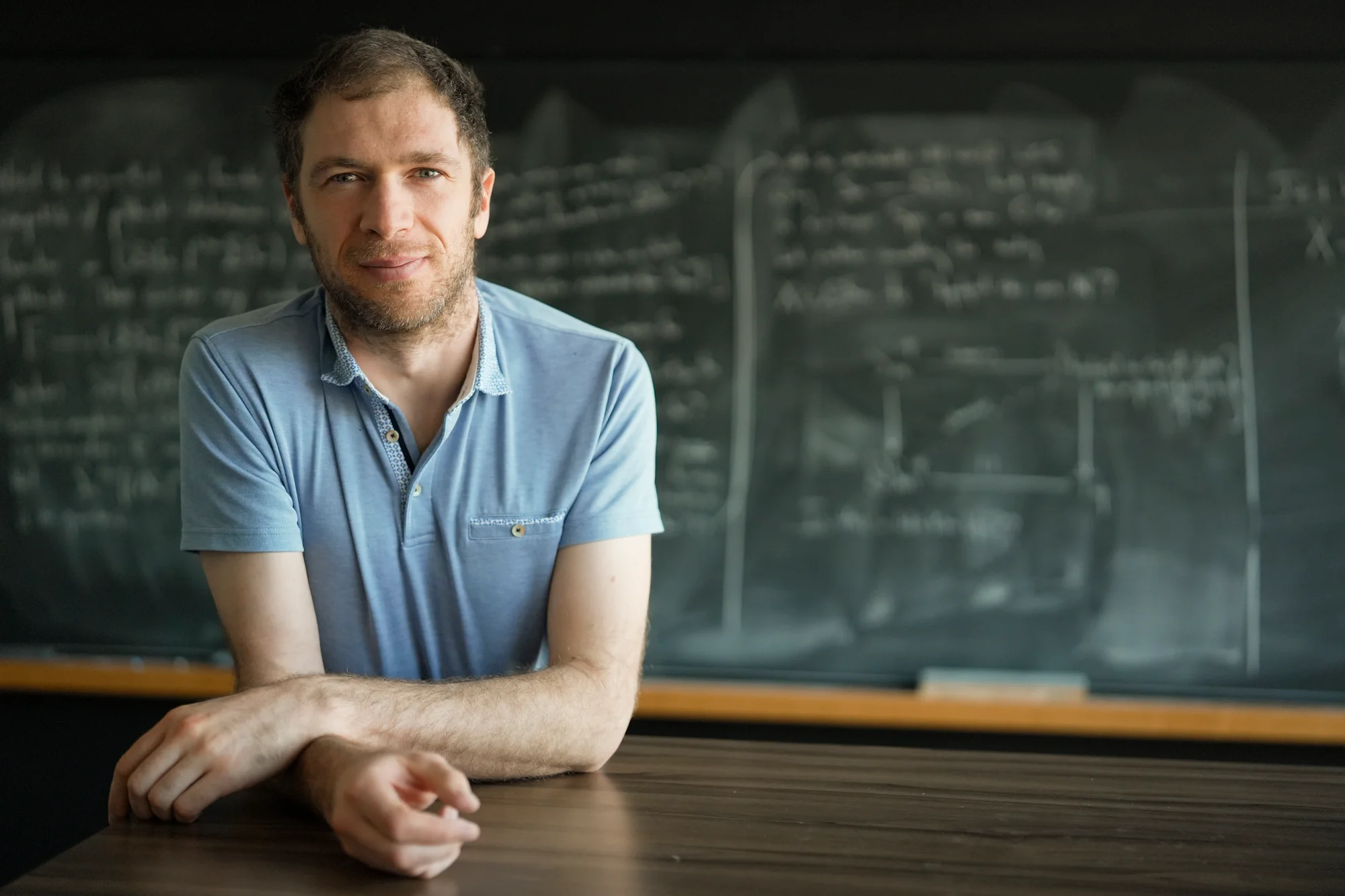
John Pardon
John Pardon’s work belongs to geometry and topology, especially the mathematical study of knots. Knot theory asks how loops of string can be tangled, transformed, and distinguished from one another. These questions may look playful, but they lead to some of the most subtle problems in modern mathematics.
Pardon first attracted major attention as an undergraduate when he solved an important problem about the “distortion” of knots: a way of measuring how difficult it is to travel along a knotted curve compared with moving directly through space. Since then, he has continued to solve major problems across geometry and topology. His work shows how even a piece of string can open the door to astonishing mathematical depth.

Jacob Tsimerman
Jacob Tsimerman works in number theory and related areas, including Hodge theory. He is especially known for his role in proving the André-Oort conjecture, a deep problem concerning special points on highly structured mathematical spaces known as Shimura varieties.
Although this area is abstract, it sits close to some of the central questions of modern mathematics: how numbers, shapes, equations, and symmetry are connected. Tsimerman’s work shows the power of pure mathematics to reveal hidden order in structures that first appear impossibly complex. He has also expressed interest in how mathematics might help us understand artificial intelligence, one of the defining challenges of our time.